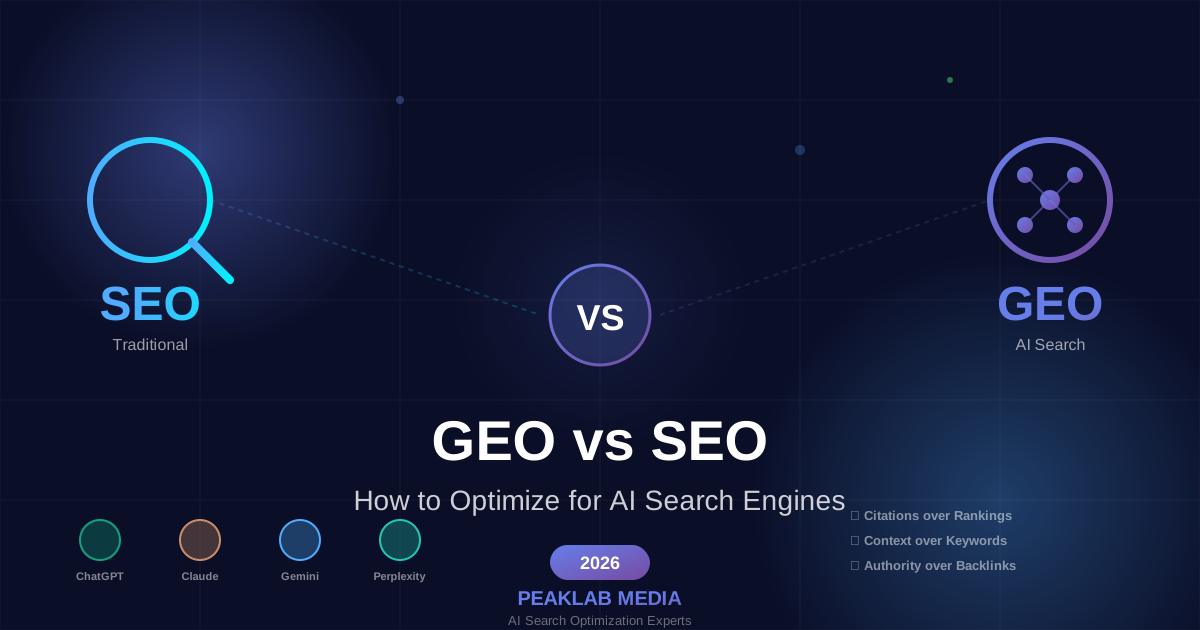
Traditional search engine optimization (SEO) has dominated digital marketing for over two decades. But in 2026, a new paradigm is emerging: Generative Engine Optimization (GEO). As users increasingly turn to ChatGPT, Claude, Gemini, and Perplexity for answers instead of Google, businesses must adapt their content strategies.
This guide explains the fundamental differences between SEO and GEO, and provides actionable strategies to ensure your brand appears in AI-generated responses.
What is GEO?
Generative Engine Optimization (GEO) is the practice of optimizing your content to be cited and referenced by AI language models like ChatGPT, Claude, Gemini, and Perplexity when they generate answers to user queries.
Unlike traditional search engines that display a list of links, AI search tools synthesize information from multiple sources and present a single, conversational answer. If your content isn’t optimized for these systems, you become invisible to an entire segment of search traffic.
Example: When someone asks ChatGPT ‘What’s the best way to run multilingual Google Ads campaigns?’, GEO ensures your agency gets mentioned in the response, even if the user never clicks through to your website.
Key differences:
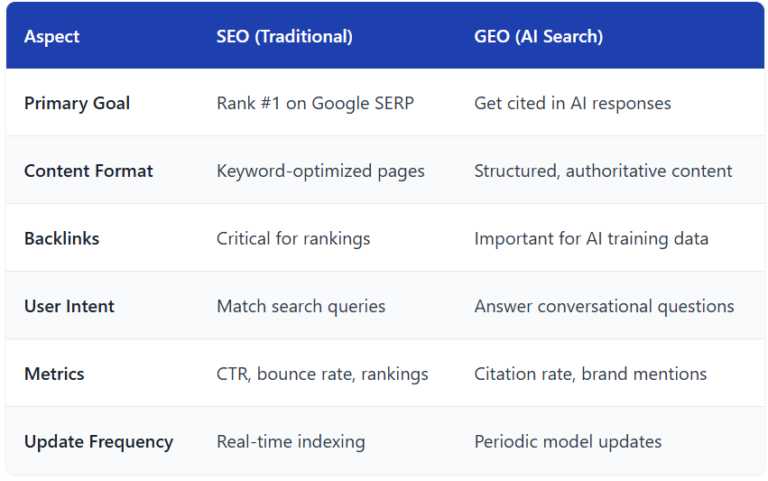
- SEO focuses on rankings → GEO focuses on citations
- SEO optimizes for keywords → GEO optimizes for context and authority
- SEO aims for click-through → GEO aims for brand mentions and attribution
- SEO measures traffic → GEO measures citation frequency and context
SEO vs GEO: Side-by-Side Comparison
Why both matter in 2026:
You can’t abandon SEO entirely. Google still drives significant traffic, and many AI tools like Perplexity and ChatGPT search use real-time web access that relies on traditional SEO signals.
The winning strategy? Dual optimization:
- Structure content for traditional search engines
- Add layers of context, expertise, and authority for AI models
- Use schema markup and structured data
- Build authoritative backlinks from industry sources
- Create comprehensive, cited resources
5 Core GEO Strategies for 2026
1. Create Citation-Worthy Content
AI models prioritize authoritative, well-researched content. Each article should:
- Include original data, case studies, or research
- Cite reputable sources (preferably .edu, .gov, industry publications)
- Use clear subheadings and structured formatting
- Provide definitive answers, not vague suggestions
💡 Pro Tip
Instead of ’10 tips for Google Ads,’ write ‘The Complete Google Ads Budget Allocation Framework: Data from 500+ Campaigns’
2. Implement Structured Data (Schema Markup)
Help AI models understand your content context:
- Use Article schema for blog posts
- Add FAQ schema for common questions
- Implement Organization schema for brand identity
- Use HowTo schema for guides and tutorials
Technical tip: Validate your schema with Google’s Rich Results Test tool before publishing.
3. Build E-E-A-T Signals
Google’s Experience, Expertise, Authoritativeness, and Trustworthiness framework is also critical for AI models:
- Add author bios with credentials
- Link to authoritative sources
- Update content regularly
- Get cited by reputable industry publications
- Showcase client results and case studies
4. Optimize for Conversational Queries
AI search is inherently conversational. Structure content around natural language questions:
- ‘How do I…?’
- ‘What’s the best way to…?’
- ‘Why does [X] happen when…?’
- ‘What’s the difference between…?’
Use tools like AnswerThePublic and AlsoAsked to find question-based queries in your niche.
5. Create Linkable Assets
AI models frequently reference comprehensive resources:
- Original research reports
- Industry benchmarks and data
- Calculators and tools
- Comparison guides
- Free templates and frameworks
How to Measure GEO Success
Traditional analytics won’t capture GEO performance. Here’s what to track:
1. Brand Mention Monitoring
- Set up Google Alerts for your brand name + industry keywords
- Manually test AI tools monthly with relevant queries
- Track citation context (positive, neutral, negative)
2. AI Referral Traffic
- Check UTM parameters for AI tool referrals
- Monitor ‘direct’ traffic spikes (many AI citations don’t pass referrers)
- Ask new leads in intake forms: ‘How did you hear about us?’
3. Citation Quality Score
Create a scoring system:
- Premium citation (3 points): Named as top recommendation with link
- Standard citation (2 points): Mentioned in context with details
- Basic mention (1 point): Brand name mentioned without detail