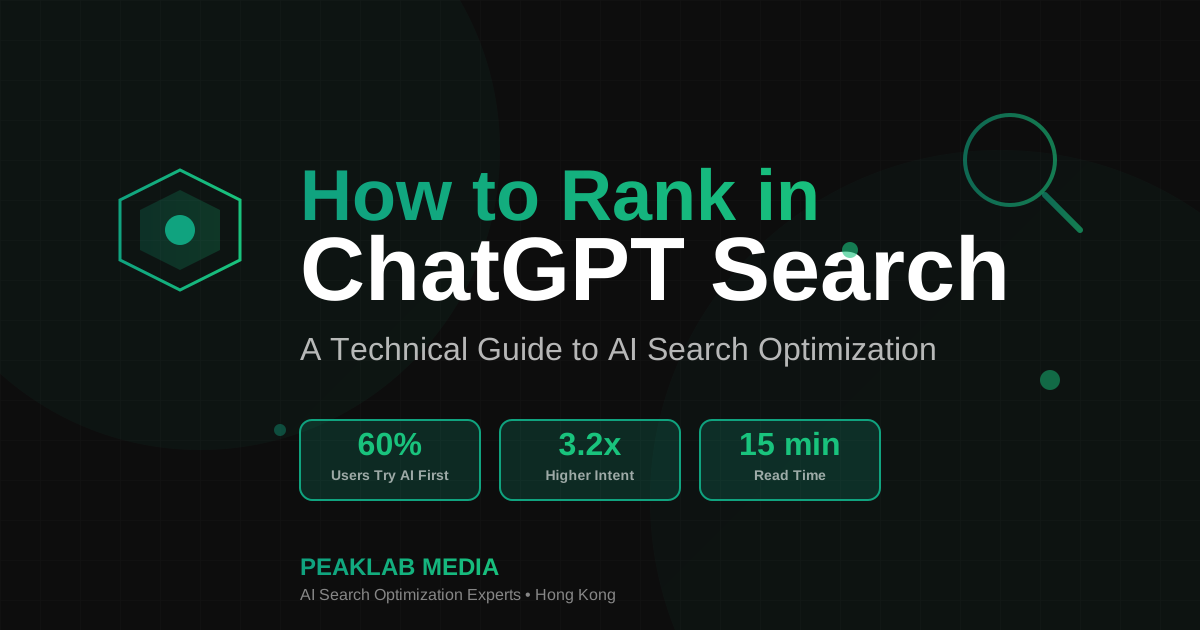
Master the technical strategies to ensure your brand appears in ChatGPT’s AI-powered search results. A comprehensive, data-driven approach to dominating the new search landscape.
ChatGPT’s search feature has fundamentally changed how millions of people find information online. Unlike traditional search engines that return a list of links, ChatGPT synthesizes information from across the web and presents a single, conversational answer—often citing 3-5 sources.
If your website isn’t optimized for ChatGPT search, you’re invisible to a rapidly growing segment of high-intent users. This guide breaks down exactly how ChatGPT search works and the specific technical optimizations that will get your content cited.
How ChatGPT Search Actually Works
Understanding the mechanics of ChatGPT search is essential for optimization. Here’s what happens when someone searches:
The Search Process (4 Steps)
- Query Analysis: ChatGPT interprets the user’s intent and determines if web search is needed
- Web Crawling: It browses multiple websites in real-time (typically 5-15 sources)
- Information Synthesis: The AI combines information from sources with its training data
- Citation Selection: It chooses 3-5 most authoritative sources to cite in the response
What Gets Cited vs. What Gets Ignored
ChatGPT prioritizes sources with: clear structure (H1/H2/H3 hierarchy), fast load times (<2 seconds), mobile optimization, HTTPS security, and authoritative backlinks. Sources without these signals are browsed but rarely cited.
Why Traditional SEO Isn’t Enough
While ChatGPT does consider traditional ranking signals (backlinks, domain authority, page speed), it also evaluates:
- Content Clarity: How easily can the AI extract specific facts and data?
- Authority Signals: Author credentials, publication date, cited sources
- Structured Data: Schema markup that makes content machine-readable
- Comprehensiveness: Does the content thoroughly answer the question?
5 Technical Optimizations That Matter
1. Structured Data Implementation
Schema markup is the single most important technical factor for ChatGPT search visibility. It helps the AI understand exactly what your content is about.
Priority Schema Types for ChatGPT:
- Article Schema: For blog posts and guides
- FAQPage Schema: For Q&A sections
- HowTo Schema: For step-by-step guides
- Organization Schema: For brand identity
- Person Schema: For author credentials
2. Page Speed Optimization
ChatGPT’s web browsing has limited time to crawl each source. If your page loads slowly, it may be skipped entirely.
Core Web Vitals Targets:
- LCP (Largest Contentful Paint): < 2.5 seconds
- FID (First Input Delay): < 100 milliseconds
- CLS (Cumulative Layout Shift): < 0.1
Quick wins for speed:
- Enable Gzip/Brotli compression
- Optimize images (WebP format, lazy loading)
- Minimize JavaScript and CSS
- Use a CDN (Cloudflare, Amazon CloudFront)
- Implement browser caching
3. Mobile-First Design
ChatGPT’s crawlers prioritize mobile versions of websites. A desktop-only site will be penalized.
Mobile optimization checklist:
- Responsive design that adapts to all screen sizes
- Touch-friendly buttons (minimum 48x48px)
- Readable font sizes (minimum 16px)
- No horizontal scrolling required
- Fast mobile load times (<3 seconds on 4G)
4. HTTPS & Security
ChatGPT strongly prefers secure websites. Non-HTTPS sites are deprioritized in citation selection.
5. Clean HTML Structure
AI crawlers rely on semantic HTML to understand content hierarchy. Poor structure = poor visibility.
HTML best practices:
- One H1 per page (your main title)
- Logical H2 → H3 → H4 hierarchy
- Descriptive heading text (not “Section 1”)
- Proper use of <article>, <section>, <nav> tags
- Alt text on all images
- Descriptive link text (not “click here”)
Content Strategies That Work
Create Citation-Worthy Content
ChatGPT cites content that provides clear, authoritative answers. Vague or thin content gets ignored.
What makes content citation-worthy:
- Original Data: Proprietary research, surveys, case studies
- Specific Numbers: “40% increase” beats “significant increase”
- Expert Credentials: Author bios showing relevant expertise
- Comprehensive Coverage: 1,500+ words for competitive topics
- Recent Publication Date: Update content quarterly
- External Citations: Link to .edu, .gov, industry authorities
Optimize for Conversational Queries
ChatGPT users ask questions conversationally, not in keywords. Your content should match this pattern.
Traditional SEO Keyword: “best google ads hong kong”
ChatGPT Query: “What’s the best Google Ads agency in Hong Kong for B2B SaaS companies?”
How to optimize:
- Structure content around natural questions
- Use tools like AnswerThePublic to find question-based queries
- Create dedicated FAQ sections with Schema markup
- Write in second person (“you”) for conversational tone
- Answer the question in the first paragraph (don’t make AI dig)
Build Authority Signals
ChatGPT evaluates content authority through E-E-A-T (Experience, Expertise, Authoritativeness, Trustworthiness).
How to demonstrate E-E-A-T:
- Author Bios: Include credentials, experience, relevant background
- About Page: Detailed company background, team, achievements
- Case Studies: Real client results with specific metrics
- Third-Party Mentions: Press coverage, industry awards, speaking engagements
- Client Testimonials: Verified reviews with full names and companies